Research Article | | Peer-Reviewed

Biochemical and Microbiological Characteristics of Infant Flours Produced from Cereals Fermented for Different Durations

Received: 10 February 2026     Accepted: 26 February 2026     Published: 12 March 2026
Views:       Downloads:
Abstract

Infant malnutrition remains a major public health concern in many developing countries, particularly in sub-Saharan Africa, where cereal-based artisanal infant flours constitute one of the main complementary foods. In this context, improving the nutritional quality and safety of these flours through traditional processes such as fermentation represents an important challenge. This study aimed to evaluate the physicochemical and biochemical characteristics of infant flours produced from local cereals (maize, millet and rice) fermented for different durations (0 h, 12 h and 24 h). An inventory of cereals sold in markets in the city of Daloa was first conducted to justify the choice of raw materials. The flours obtained were then subjected to physicochemical (pH, moisture content, dry matter, ash and fiber), biochemical and microbiological analyses using standard methods. Statistical analyses were performed to determine significant differences among fermentation times. The results showed a significant decrease in pH during fermentation for all flours, from 6.49 to 5.23 for maize, from 6.28 to 4.69 for millet and from 6.28 to 4.75 for rice. Conversely, moisture content increased with fermentation time, reaching maximum values of 22.62% for maize, 20.33% for millet and 16.22% for rice, while dry matter decreased to 77.37%, 79.67% and 83.78%, respectively. Ash content slightly decreased but remained within Codex Alimentarius standards (≥ 3%). In contrast, fiber content markedly decreased, particularly in maize flours (from 3.88% to 1.48%). Microbiological analyses revealed a progressive increase in lactic acid bacteria with fermentation time, confirming effective fermentation. In conclusion, fermentation significantly alters the physicochemical and biochemical properties of cereal-based infant flours; therefore, nutritional enrichment or complementation is necessary to meet infant nutritional requirements, while the marked increase in moisture content highlights the need for post-fermentation drying to ensure product stability and adequate shelf life.

Published in Advances in Biochemistry (Volume 14, Issue 1)
DOI 10.11648/j.ab.20261401.12
Page(s) 9-20
Creative Commons

This is an Open Access article, distributed under the terms of the Creative Commons Attribution 4.0 International License (http://creativecommons.org/licenses/by/4.0/), which permits unrestricted use, distribution and reproduction in any medium or format, provided the original work is properly cited.

Copyright

Copyright © The Author(s), 2026. Published by Science Publishing Group

Keywords

Fermentation, Infant Flours, Local Cereals, Physico-chemical Properties, Nutritional Quality

1. Introduction
Child malnutrition is a major public health problem in developing countries . In sub-Saharan Africa, food and nutrition situations require attention . According to estimates, undernourishment is much more pronounced among children under 59 months of age, but with a high prevalence (73%) among children aged 6 to 23 months. Far from improving, this situation is deteriorating further among children, leading to an increased risk of death . In Côte d'Ivoire, malnutrition contributes to 33% of infant mortality, representing an estimated 128,354 deaths of children under five each year. A 2012 survey by the National Institute of Statistics (INS) showed that approximately 30% of children under five suffer from stunted growth, with 12% suffering from severe stunting. In response to these enormous negative consequences of malnutrition, the National Nutrition Policy emphasises healthy, diverse and nutritious diets. Nutrition during the first two years of a child's life is critical for their physical and mental development. From the age of six months, breast milk becomes insufficient in terms of both quality and quantity, hence the need for complementary foods as recommended by the World Health Organisation . In this context, coupled with low household purchasing power, many mothers in Côte d'Ivoire, particularly in Daloa (central-western Côte d'Ivoire), introduce artisanal weaning flours into their children's diets at a rate of 36.67% . Cereals are most commonly used to produce these flours through various traditional processes . Fermentation is one of the steps in the process used to make these types of flour. Fermentation is an inexpensive and simple method that can cause partial alteration of the nutrients contained in food . However, it also facilitates food preservation, increases shelf life and improves the nutritional value of products . As with traditionally produced products, the largely uncontrolled or unregulated production methods used to obtain artisanal infant flours can sometimes result in products of varying quality . Indeed, the quality defects associated with this type of product are most often nutritional in nature and are closely linked to the technological processes to which these products are subjected . They have numerous shortcomings, including low energy density and variable organoleptic and microbiological qualities . This raises the issue of a lack of knowledge about the nutritional values of traditionally produced infant flours. A good understanding of the manufacturing process, especially the fermentation stage, could contribute effectively to a better understanding of certain biochemical and nutritional technological defects. Does fermentation affect the biochemical and nutritional quality of these flours? It is in this context that this study was initiated to evaluate the effect of fermentation on the nutritional characteristics of traditionally produced infant flours. Specifically, this study aims to inventory the cereals sold in the markets of the city of Daloa and used in infant food; identify the micro-organisations involved in the cereal fermentation process; and finally determine the biochemical characteristics of flours produced from cereals fermented at different times.
2. Materials and Methods
2.1. Study Site
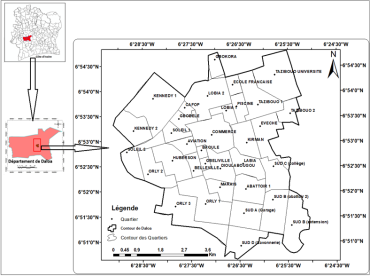
This study was conducted in the city of Daloa (Figure 1). This city is located in the central-western part of Côte d'Ivoire . Its GPS coordinates are as follows: longitudes 6°24 and 6°29 West and latitudes 6°50 and 6°55 North. It is the capital of the Upper Sassandra region and is 141 km from Yamoussoukro (political capital) and 383 km from Abidjan (economic capital). It covers an area of 17,761 km² with an estimated population of 705,378 inhabitants .
Figure 1. Map of the city of Daloa and its neighbourhoods .
2.2. Biological Materials
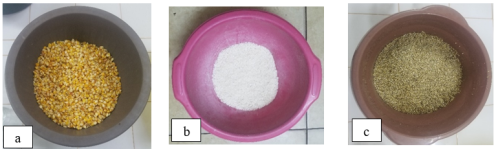
The study materials consisted of maize (variety EV 8666-SR), rice (variety WITA 9) and millet (variety FM 16) sold in the markets of the city of Daloa (Figure 2).
Figure 2. Cereals used in our study: a) Maize grains; b) Rice grains; c) Millet grains.
2.3. Culture Media
The culture media used in this study were as follows: MRS medium (Deutscher, France), in both agar and broth forms, was used for the cultivation of lactic acid bacteria; Plate Count Agar (Humeau, France) was employed for the enumeration of aerobic mesophilic microorganisms in accordance with the NF/ISO 4833:2003 standard; Sabouraud medium supplemented with chloramphenicol (Apha Biosciences, USA) was used for the enumeration of molds and yeasts; finally, Buffered Peptone Water (Difco, France) was used during the pre-enrichment and enrichment steps of the samples intended for analysis.
2.4. Sociodemographic Surveys
Two types of surveys were conducted as part of this study. The first took place from 18 to 28 February 2025 among cereal vendors in the markets of Daloa. The objective of this survey was to identify the different types of cereals sold. A total of 70 vendors were interviewed across the markets visited in the following neighborhoods: Lobia, Tazibouo, Abattoir, Orly, and Soleil. The second survey focused on mothers with children of weaning age. It was carried out from 5 to 20 march 2025 in several health centers in the city of Daloa. The sites involved in this activity were: the Maternal and Child Protection Center (MCPC) in the Commerce neighborhood, the Catholic Dispensary in the Lobia neighborhood, the Municipal Maternity in the Kennedy neighborhood, and the Regional Hospital Center (RHC) in the Kirmann neighborhood. A total of 104 mothers were interviewed across all sites. The questionnaire administered to the mothers addressed household socioeconomic characteristics, the type of cereal used, and the location where the cereals were purchased.
2.5. Sampling
The cereals selected for this study: maize, rice, and millet were chosen based on their preference among mothers. They were purchased from the previously mentioned markets. For each type of cereal, a total quantity of 3 kg was acquired, divided into three 1kg lots (3 lots per cereal), making a total of 9 lots. For any given cereal, the three lots were purchased from three different markets. All cereal samples were then placed in an icebox and transported to the laboratory prior to initiating the flour production process.
2.6. Flour Production Process
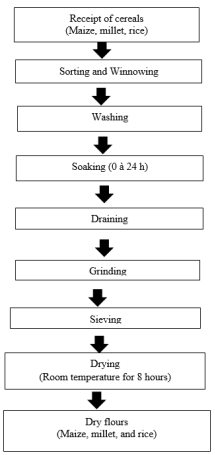
The flours were produced in the laboratory from the purchased cereals, following a traditional manufacturing method used by the mothers surveyed. This production process is illustrated in the diagram below (Figure 3). Sorting and Winnowing: The various cereals, already dehulled at the time of purchase, are sorted and winnowed to remove moldy grains and unwanted debris. Washing: After sorting, the cereal grains are washed with potable water to eliminate sand particles and dust. The washing was carried out using a water-to-cereal mass ratio of 3 liters per 1 kg. Soaking and Draining: Soaking is carried out solely to soften the grains and facilitate grinding. The soaking time varies from 0 to 24 hours. Each cereal is soaked in an amount of water equal to twice its mass (2 L per 1 kg). After soaking, the grains are placed in large strainers to allow the water to drain off. Grinding and Sieving: Several grinding cycles (2 to 3 times) are performed using a mixer (Binatone, United Kingdom). The ground flour is then sieved once using a sieve with a mesh size of approximately 500 µm. Drying: Drying is used to reduce the moisture content of the flour in order to prolong its shelf life. It is carried out at room temperature and lasts an average of 8 hours.
Figure 3. Flowchart of maize, millet, and rice flour production according to the surveyed mothers.
2.7. Monitoring Microbial Evolution During Fermentation (Soaking)
A sample of 300 g of cereals was taken at different times (0 h, 12 h, and 24 h) to monitor the evolution of the targeted microorganisms during soaking. The microorganisms studied were aerobic mesophilic germs (AMG), lactic acid bacteria, and fungal flora (yeasts and molds). The culture media used for microbiological analyses were prepared according to the manufacturers’ instructions indicated on the packaging. The preparation of the stock suspension and decimal dilutions was carried out following the NF EN ISO 6887-1:2017 standard, which defines general rules for preparing stock suspensions and decimal dilutions for microbiological examinations. After inoculation, Petri dishes were incubated at different temperatures depending on the microorganisms targeted: for AMG, incubation was done at 30°C for 48 to 72 hours; for yeasts and molds, incubation was at 25°C for 72 hours; finally, for lactic acid bacteria, incubation was performed at 30°C for 72 hours in anaerobic jars.
2.8. Expression of Enumeration Results
The average concentration or bacterial load was determined according to the ISO 7218 (2007) standard. The calculation of the number of colony-forming units (CFU) per gram of sample (CFU/g) from the colony count obtained on Petri dishes was performed using the following formula (1):
(UFC/g)=ciN1+0,1N2d.v(1)
N (CFU/g): Number of colony-forming units per gram of food;
∑Ci: Sum of colonies counted on all selected plates from successive dilutions;
v: Volume of inoculum applied to each plate (in mL);
N1: Number of selected plates at the first considered dilution;
N2: Number of selected plates at the second considered dilution;
d: Dilution factor corresponding to the first selected dilution.
2.9. Monitoring of Biochemical and Physicochemical Parameters During Fermentation
At different fermentation times (0 h, 12 h, and 24 h), 300 g of cereals are collected and ground to obtain flour. Approximately 200 g of flour are obtained at each sampling and packaged for subsequent analyses.
2.10. Determination of pH
The pH was assessed according to the method described in . A 10 g portion of each cereal flour was homogenized in 100 mL of distilled water. After continuous stirring, the pH of the mixture was measured using a pH meter (Agimatic-N type), with the value displayed directly on the instrument’s screen.
2.11. Determination of Ash Content
The ash content of the different flours was determined according to the method in . Five grams of flour were weighed and placed in a previously tared crucible (Mce). The mass of the crucible containing the sample was recorded as Mcf. The crucible was then placed in a muffle furnace (NABERTERM, GmbH LT9/11/B180, Germany) and incinerated at 550°C for 12 hours. After incineration, the crucible was removed from the furnace, allowed to cool in a desiccator, and subsequently weighed (Mca). The ash percentage is determined using the following formula.
% Ash=Mca-MceMcf-McE×MS×100(2)
Mce: mass of the empty crucible
Mcf: mass of the crucible + sample
Mca: mass of the crucible + ash after removal from the furnace
2.12. Determination of Moisture and Dry Matter Content
The moisture content is obtained using the method in . Five grams (5 g) of cereal flour powder are placed in a previously weighed crucible (m0). The total mass is recorded as m1. The crucible is then placed in an oven at 105°C for 24 hours. At the end of the operation, the crucible is removed and placed in a desiccator for 10 minutes, then weighed again, giving m2, the new mass obtained. The water content of the samples is determined using the following formula.
%H=M1- M2M1-M0 ×100(3)
%H: Moisture content per 100 g of sample; M0: Mass in grams of the empty capsule;
M1: Mass of the crucible containing the sample before drying; M2: Mass of the crucible containing the sample after drying. Therefore, the percentage of dry matter (%DM) is obtained by the relationship.
%MS=100-%H(4)
2.13. Determination of Protein Content
The nitrogen content is determined using the Kjeldahl method describ in . The nitrogen content, multiplied by a conversion factor of 6.25, is used to estimate the total protein content. The test sample (1 g) is mixed with 3.5 g of potassium sulphate and 0.5 g of copper sulphate. Twenty millilitres of concentrated sulphuric acid are added to this mixture. The mixture is mineralised at 380°C for two hours. After cooling and adding distilled water, the solution is transferred to a 100 mL flask. Ten (10) mL of this solution is taken and added to 10 mL of soda (35%). The distillate obtained is collected in 20 mL of boric acid solution (4%). Titration is carried out with 0.1 N hydrochloric acid in the presence of a few drops of mixed indicator (methyl red + bromocresol green). The protein content is given by the following expression:
Protein (%)=Ve-Vb×14,007×NP×MS ×100×F(5)
Ve = volume of HCl added for sample titration, Vb = volume of HCl added for blank titration, 0.1 = normality of HCl; 14 = atomic mass of nitrogen; P: sample test batch; F: conversion factor for nitrogen to protein is 6.25; MS: dry matter.
2.14. Determination of Lipid Content
The lipid content was determined using the Soxhlet extraction method in . Ten (10) grams of flour sample were used for the analysis, with hexane as the solvent. The lipid content of the samples was calculated using the following formula:
Lipid (%)=(M2 -M1)×100Pe×MS(6)
Lipids (%): Lipid content; M1: Mass of empty flask; M2: Mass of flask and fat combined; Pe: Test sample; MS: Dry matter.
2.15. Determination of Total Carbohydrate Content
The total sugar content was calculated by difference described in .
(%)=100-(P%+L%+CB%)(7)
G%: total carbohydrate content per 100 g of dry matter; P%: total protein content per 100 g of dry matter; L%: total lipid content per 100 g of dry matter; CB%: crude ash content per 100 g of dry matter.
2.16. Determination of Total Energy Value
The total energy value corresponds to the amount of energy released by the combustion of macronutrients: proteins, carbohydrates and lipids contained in the sample. It is calculated by multiplying the average values of carbohydrates, lipids and proteins by the respective Atwater thermal coefficients, 4 Kcal, 9 Kcal and 4 Kcal. The total energy value in kcal per 100 g of dry matter is given by the following equation .
EKcal=4×%Protein+4×%Glucid+(9×%Lipid)(8)
E: total energy value per 100 g of sample; P: total protein content of the sample; G: total carbohydrate content, L: total lipid content.
2.17. Determination of Crude Fibre Content
Fibre is determined using the Weende method. Two grams (2g) of flour sample were placed in a flask, then 50 mL of 0.25 N sulphuric acid was added. The mixture obtained was homogenised and boiled for 30 minutes under reflux cooling. After 30 minutes, 50 mL of 0.31 N sodium hydroxide (NaOH) was added to the contents and brought to the boil again under reflux for 30 minutes. The extract obtained was filtered through Whatman No. 4 paper and the residue was washed several times with hot water until the alkali was completely removed. The residue was dried in an oven at 105°C for 8 hours. After cooling in a desiccator, the residue was weighed and then incinerated in an oven at 550°C for 3 hours. After cooling, the ashes obtained were weighed. The crude fibre content was given as a percentage by mass as follows:
Fibre %=(M1 - M2)×100Me×MS(9)
Where: M1: mass (g) of dry flour residue; M2: mass (g) of incinerated flour residue; Me: mass (g) of weighed flour; MS: dry matter.
2.18. Determination of Mineral Content During Fermentation
The calcium, iron, and magnesium contents were determined by atomic absorption spectrophotometry (AAS) using a Thermo Scientific iCE 3000 Series spectrophotometer equipped with an air–acetylene flame. The analysis was carried out according to standard methods described in . The wavelengths used were 422.7 nm for calcium, 248.3 nm for iron, and 285.2 nm for magnesium. The results, expressed in mg/L, were converted to mg/kg.
Mineral (mg/kg)=(CE-CBlank)×Vm(10)
CE: Sample concentration in mg/L. V: volume of ash solution (50 mL); CBlank: Blank concentration in mg/L; m: Mass of test sample (0.5 g).
2.19. Statistical Analyses
Raw data entry and descriptive analysis were performed using Microsoft Excel 2019. The variability of the physicochemical and microbiological parameters of the different flours was highlighted by a one-way analysis of variance (ANOVA). Significant differences between flours were assessed at a 5% threshold using the chi-square test. These analyses were performed using R software version R64×4.1.2.
3. Results
3.1. Inventory of Cereals Sold and Used in Infant Feeding in the City of DALOA
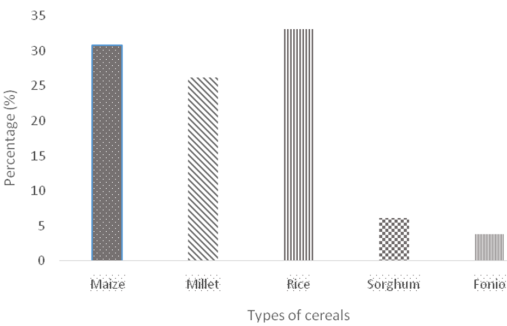
Figure 4 below shows the results of the survey on the different cereals sold in the markets of the city of Daloa. The survey shows that rice is the most widely sold cereal (33.08%), followed by maize (30.77%) and millet (26.15%). Sorghum and fonio are less widely sold, with respective proportions of 6.15% and 3.85%.
Figure 4. Distribution of cereals sold in Daloa markets.

Table 1. Types of cereals used in infant feeding by mothers in Daloa.

Cereals

Number of mothers

Percentage (%)

Maize

110

44,71

Millet

64

26,02

Rice

38

15,45

Sorghum

25

10,16

Fonio

9

3,66

Total

246

100

As for the cereals used by mothers in infant feeding, the survey results are shown in Table 1. The survey results show that all cereals sold in Daloa markets are used in infant feeding. However, maize is the most widely used by mothers (44.71%). As for the other cereals, they have respective usage rates of 26.02% for millet, 15.45% for rice, 10.16% for sorghum and 3.66% for fonio.
3.2. Monitoring the Evolution of Microbial Flora During Cereal Fermentation
The Table 2 below shows the results of the evolution of microbial loads during the fermentation of the three cereals (maize, millet, and rice). The results reveal similar trends with notable quantitative variations. Aerobic mesophilic germs (AMG) increase significantly between T0 and T24, rising, for example, from 3.11 × 10³ CFU/g to 6.5 × 10⁴ CFU/g for maize, from 5.13 × 10³ to 8.48 × 10³ CFU/g for millet, and from 6.5 × 10² to 5.01 × 10³ CFU/g for rice. The fungal flora (yeasts and molds, YM) follows a characteristic pattern: it increases between 0 and 12 hours (for example, from 8.98 × 10¹ to 3.41 × 10² CFU/g in maize) and then decreases at 24 hours (3.3 × 10¹ CFU/g), while for millet, the yeast and mold load remains stable between 8.25 × 10² and 8.98 × 10² CFU/g before dropping to 8.7 × 10¹ CFU/g at 24 hours. Finally, lactic acid bacteria (LAB) show exponential growth, rising from 3.05 × 10² to 4.5 × 10⁴ CFU/g in maize, from 7.76 × 10¹ to 7.96 × 10³ CFU/g in millet, and from 6.9 × 10¹ to 4.68 × 10³ CFU/g in rice.
Table 2. Charge de la flore microbienne au cours de la fermentation.

Cereals

Fermentation time

AMG (UFC/g)

YM (UFC/g)

LAB (UFC/g)

Maize

T0 (0h)

3,11.103a

8,98.101a

3,05.102a

T1 (12h)

1,36.104b

3,41.102b

1,67.103b

T2 (24h)

6,5.104a

3,3.101a

4,5.104a

Millet

T0 (0h)

5,13.103d

8,25.102d

7,76.101d

T1 (12h)

7,41.103d

8,98.102d

3,38.102d

T2 (24h)

8,48.103a

8,7.101a

7,96.103a

Rice

T0 (0h)

6,5.102b

2,9.102b

6,9.101b

T1 (12h)

3,76.103c

5,23.102c

3,77.102c

T2 (24h)

5,01.103a

7.101a

4,68.103a

The values are means for n = 2; ns: not significant at p < 5%. T0 = 0 h; T1 = 12 h; T2 = 24 h. AMG: Aerobic Mesophilic Germs, YM: Yeasts and Molds, LAB: Lactic Acid Bacteria.
3.3. Monitoring of Biochemical Parameters in Flours at Different Fermentation Times
3.3.1. Macronutrients and Energy Values of the Flours
Table 3. Macronutrient contents and Energy Values of the different flours.

Flours

Fermentation time (h)

Lipid (%)

Protein (%)

Glucid (%)

EV (Kcal/100g)

Maize

T0 (0h)

6,75h±0,02

8,65h±0,03

80,32h±0,04

416,65h±0,28

T1 (12h)

2,74f±0,21

6,43f±0,09

86,58f±0,24

396,74f±1,28

T2 (24h)

1,67f±0,04

6,28f±0,05

87,89f±0,00

391,71f±0,15

Millet

T0 (0h)

3,46e±0,01

5,85e±0,06

86,91e±0,12

402,26e±0,16

T1 (12h)

3,52d±0,09

5,15d±0,00

87,84d±0,08

401,86d±0,23

T2 (24h)

2,80c±0,01

4,93c±0,1

88,98c±0,15

400,84c±0,55

Rice

T0 (0h)

0,19g±0,02

6,78g±0,04

87,73g±0,01

380,79g±0,08

T1 (12h)

0,32b±0,01

4,63b±0,04

89,80b±0,07

380,66b±0,02

T2 (24h)

0,29a±0,02

4,32a±0,02

90,16a±0,02

379,59a±0,21

Codex Alimentarius 2010

≥ 7

≥ 15

≥ 68

≥ 400

Values are means ± standard deviations of three measurements (n = 2). The same superscript letter in the same column indicates no significant difference at the 5% level between samples. T0 = 0 h; T1 = 12 h; T2 = 24 h.
Table 3 presents the evolution of macronutrients and the energy value of maize, millet, and rice flours during fermentation. The results show a progressive decrease in lipid content for all flours, dropping for example from 6.75% to 1.67% between T0 and T24 for maize, from 3.46% to 2.80% for millet, and remaining very low for rice (0.19 to 0.29%). Protein levels also follow a decreasing trend, going from 8.65% to 6.28% for maize, from 5.85% to 4.93% for millet, and from 6.78% to 4.32% for rice. Conversely, fermentation leads to a relative increase in carbohydrate content, rising from 80.32% to 87.89% in maize, from 86.91% to 88.98% in millet, and from 87.73% to 90.16% in rice. The energy value also decreases, dropping from 416.65 to 391.71 kcal/100 g in maize, from 402.26 to 400.84 kcal/100 g in millet, and from 380.79 to 379.59 kcal/100 g in rice. Compared with Codex Alimentarius standards (≥ 7% lipids, ≥ 15% proteins, ≥ 68% carbohydrates, and ≥ 400 kcal/100 g), the fermented flours meet the requirements for carbohydrates but do not satisfy the recommendations for lipids, proteins, or energy value, except for maize at T0, which reaches 416.65 kcal/100 g.
3.3.2. Mineral Composition of the Flours
Table 4 shows the average mineral composition of maize, millet, and rice flours at different fermentation times. For maize, calcium slightly decreases (28.98 to 24.67 mg/100 g), iron increases slightly (65.89 to 70.86 mg/100 g), and magnesium drops significantly after 12 hours (100.54 to 53.95 mg/100 g). In millet, calcium, iron, and magnesium generally decrease over time, with calcium notably falling from 44.53 to 24.54 mg/100 g. Rice shows a marked increase in calcium at 24 hours (92.15 mg/100 g), stable iron levels around 53 mg/100 g, and a decrease followed by a slight increase in magnesium. Compared to Codex Alimentarius standards (≥ 500 mg Ca, ≥ 16 mg Fe, ≥ 19 mg Mg), the flours have calcium levels well below the threshold, meet the iron requirements, and sometimes reach the magnesium threshold. These results indicate that fermentation affects the mineral composition differently depending on the cereal, but overall levels remain low, especially for calcium.
Table 4. Average mineral composition of flour samples.

Flours

Fermentation time (h)

Calcium (mg/100g)

Iron (mg/100g)

Magnesium (mg/100g)

Maize

T0

28,98i±0,78

65,89i±3,15

100,54i±0,48

T1

45,60g±1,16

53,54g±2,83

50,76g±0,19

T2

24,67h±1,14

70,86h±1,26

53,95h±0,19

Millet

T0

44,53f±0,32

53,94f±1,39

45,46f±0,32

T1

34,49e±1,12

49,53e±0,69

31,09e±0,31

T2

24,54d±1,23

54,73d±5,84

22,39d±0,04

Rice

T0

18,16b±0,98

52,79b±3,85

15,17b±0,08

T1

16,23a±0,51

51,44a±2,83

7,81a±0,01

T2

92,15c±2,24

55,32c±4,45

16,66c±0,02

CODEX Alimentarius 2010

≥ 500

≥ 16

≥ 19

Values are the means ± standard deviations of three measurements (n = 3). The same superscript letter within the same column indicates that there is no significant difference at the 5% level between samples. T0 = 0 h; T1 = 12 h; T2 = 24 h.
3.4. Evolution of the Physicochemical Properties of the Flours During Fermentation
The physicochemical analyses of the nine flours focused on pH, moisture, dry matter, ash and fiber contents (Table 5). Overall, pH decreases with fermentation, ranging from 6.49 to 5.23 in maize flour, from 6.28 to 4.49 in millet flour, and from 6.28 to 4.75 in rice flour, with extreme values recorded in maize at T0 (6.49) and in rice at T2 (4.75), and significant differences (p < 0.05). At the same time, moisture content increases from 10.95 to 22.62% in maize, from 10.46 to 20.33% in millet, and from 9.48 to 16.22% in rice with the highest value observed in maize at T2 (22.62%) and the lowest in rice at T0 (9.48%), all exceeding the standard (≤ 5%). Consequently, dry matter decreases, ranging from 89.05 to 77.37%, 89.54 to 79.67% and 90.51 to 83.78% in maize, millet and rice flours respectively, with extreme values in rice at T0 (90.51%) and in maize at T2 (77.37%), and none meeting the standard (≥ 95%). In addition, ash content slightly decreases, from 4.27 to 4.16% in maize, 3.77 to 3.42% in millet and 5.29 to 5.22% in rice, with extremes recorded in rice at T0 (5.29%) and in millet at T2 (3.42%), all complying with the standard (≥ 3%). Finally, fiber content also decreases, ranging from 3.88 to 1.48% in maize, from 3.16 to 2.23% in millet and from 0.46 to 0.34% in rice, with maximum values in maize at T0 (3.88%) and minimum values in rice at T2 (0.34%), and all remaining below the standard (≥ 5%).
Table 5. Mean values of the physicochemical parameters of the different flours.

Flours

Fermentation time (h)

pH

Moisture (%)

Dry Matter (%)

Ashes (%)

Fibres (%)

Maize

T0

6,49±0,12a

10,95±0,35a

89,05±0,35a

4,27±0,03a

3,88±0,01a

T1

5,82±0,01b

20,52±0,62b

79,44±0,62a

4,24±0,05a

2,11±0,16b

T2

5,23±0,01b

22,62±0,38c

77,37±0,38c

4,16±0,01b

1,48±0,24c

Millet

T0

6,28±0,04a

10,46±0,08a

89,54±0,08a

3,77±0,04a

3,16±0,24a

T1

5,49±0,06b

18,05±0,07b

81,94±0,07b

3,49±0,01b

2,30±0,03b

T2

4,69±0,02c

20,33±0,04c

79,67±0,04c

3,42±0,03b

2,23±0,07c

Rice

T0

6,28±0,07a

9,48±0,02a

90,51±0,02a

5,29±0,01a

0,46±0,11a

T1

5,78±0,04b

15,07±0,04b

84,93±0,04b

5,24±0,01a

0,44±0,07a

T2

4,75±0,07c

16,22±0,03c

83,78±0,03c

5,22±0,02a

0,34±0,03b

Codex Alimentarius

2010

_

≤ 5

≥95

≥3

≥ 5

Values are the means ± standard deviations of three measurements (n = 3). The same superscript letter within the same column indicates that there is no significant difference at the 5% level between samples. T0 = 0 h; T1 = 12 h; T2 = 24 h.
4. Discussion
The evaluation of the physicochemical and biochemical characteristics of infant flours produced from cereals fermented for different durations is essential to understand the impact of fermentation on their nutritional quality, safety, and suitability for infant feeding. To initiate this study, a survey of cereals sold in the markets of the city of Daloa was conducted. The results showed a strong predominance of maize, followed by millet, rice, sorghum and, to a lesser extent, fonio. This distribution reflects the heterogeneous availability of cereals and highlights local food preferences. The high representation of maize can be explained by its importance in local agriculture, ease of production, versatility in culinary uses, and relatively low cost. This observation is consistent with reports from other regions of Côte d’Ivoire, where maize is the main cereal consumed and commercialized . Regarding the analysis of flours produced from cereals fermented for different durations, the results also indicate that fermentation exerts a significant influence on the evolution of microbiological, physicochemical and nutritional parameters of maize, millet and rice flours. First, the evolution of the microbial flora (total aerobic mesophilic bacteria, yeasts and molds, and lactic acid bacteria) showed a marked increase in microbial populations between T0 and T2, particularly lactic acid bacteria. These findings are consistent with the work of , who reported that spontaneous cereal fermentation promotes the growth of homo- and hetero-fermentative lactic acid bacteria responsible for the production of lactic acid, acetic acid and other metabolites. The production of these metabolites likely explains the decrease in pH observed in all flours (maize: 6.49 to 5.23; millet: 6.28 to 4.69; rice: 6.28 to 4.75). These results agree with those reported by and , who demonstrated that pH reduction is strongly correlated with the increase in lactic acid bacteria during fermentation, thereby improving both biological preservation and digestibility of fermented cereal products. Moreover, the increase in moisture content observed in all flours (up to 22.62% for maize) may be attributed to polysaccharide solubilization and hydration of cellular components by microbial enzymes . According to Codex Alimentarius standards (2010), such moisture levels are not compatible with proper shelf stability, indicating that fermented flours must undergo post-fermentation drying before packaging. This increase in moisture is associated with a proportional decrease in dry matter, as observed in all cereals. Indeed, enzymatic degradation of starch, fibers and proteins reduces dry matter content in fermented flours, especially with prolonged fermentation . With respect to minerals, the low calcium content relative to the recommended standard (Ca ≥ 500 mg/100 g) at all fermentation times could, according in and be explained by the progressive solubilization of phytates under the action of microbial phytases. These results confirm that, without enrichment, such flours cannot serve as an adequate mineral source for infant feeding. Similar observations were reported in . The authors highlighted that locally produced infant flours are often nutritionally inadequate due to non-standardized processing and formulation methods, leading to insufficient micronutrient intake among children aged 6-24 months. From a nutritional standpoint, the decrease in lipid and protein contents observed after 24 h of fermentation is consistent with the findings in . The authors reported that cereal microflora utilize part of the lipids and amino acids for metabolic activities. Conversely, the increase in carbohydrate content observed in some flours during fermentation may reflect a relative concentration effect due to the reduction of other macronutrients. Furthermore, the reduction in fiber content, particularly in maize flours (from 3.88% to 1.48%), confirms the observations in and , who demonstrated that fermentative microorganisms produce enzymes such as xylanases and cellulases capable of degrading insoluble fibers. This process improves flour digestibility and solubility, which is advantageous in the context of infant foods where low viscosity is desirable .
5. Conclusion
This study demonstrates that fermentation significantly affects the physicochemical, biochemical and microbiological properties of cereal-based infant flours. The progressive acidification and increased lactic acid bacteria confirm effective fermentation, while changes in moisture, dry matter, ash and fiber contents highlight important technological and nutritional modifications. However, despite these improvements, the flours do not fully meet infant nutritional requirements. Therefore, nutritional enrichment or complementation is necessary, and post-fermentation drying is essential to ensure product stability and safe storage.
Abbreviations

AMG

Aerobic Mesophilic Germs

ANOVA

Analysis of Variance

AAS

Atomic Absorption Spectrophotometry

CFU

Colony Forming Units

DM

Dry Matter

EV

Energy Value

LAB

Lactic Acid Bacteria

MCPC

Maternal and Child Protection Center

RHC

Regional Hospital Center

YM

Yeasts and Molds

ISO

International Organization for Standardization

AOAC

Association of Official Analytical Chemists

AOCS

American Oil Chemists’ Society

Acknowledgments
We would like to thank Dr. YAO Kouadio, Director of the Central Analysis Laboratory at Nangui Abrogoua University (Abidjan), and his team for their valuable assistance in establishing the biochemical and nutritional parameters of this study.
Author Contributions
Zébré Arthur Constant: Conceptualization, Methodology, Writing – original draft
Combo Agnan Marie-Michel: Methodology, Data curation, Formal Analysis, Writing – review & editing
Ya Kouamé Claude: Methodology, Writing – review & editing
N’goran Amani Anicet: Investigation, Data analysis, Data curation
Karou Damintoti Simplice: Writing – review & editing
Beugré Avit Maxwel: Writing – review & editing
Konaté Ibrahim: Writing – review & editing
Kouassi Kouassi Clément: Supervision, Writing – review & editing
Data Availability Statement
The data is available from the corresponding author upon reasonable request.
Conflicts of Interest
The authors declare no conflicts of interest.
References
[1] FAO. (2010). The State of Food Insecurity in the World: Addressing Food Insecurity in Protracted Crisis. Rome (Italy), 32 p.
[2] Asirvatham, R.., Demi, S. M., Ezezika, O. Are sub-Saharan African national food and agriculture policies nutrition-sensitive? A case study of Ethiopia, Ghana, Malawi, Nigeria, and South Africa. Agric & Food Secur, 2022, 11, 60.
[3] Rice, A. L., Sacco, L., Hyder, A., Black, R. E. Malnutrition as an underlying cause of childhood deaths associated with infectious diseases in developing countries. Bull World Health Organ, 2000, 78(10): 1207-21.
[4] World Health Organization. (2023). WHO guideline for complementary feeding of infants and young children 6–23 months of age. World Health Organization.
[5] Agbo, A. E., Kouamé, C., N'Doua, N. D., Kouassi, A., Brou, K. Assessment of Cocoa Producers’ Children Nutritional Status in the Nawa Region, Côte d’Ivoire. Journal of Food and Nutrition Research. 2017, 5(8), 606-613.
[6] N'zi, F. A. A., Kouakou-Kouamé, C. A., N'guessan, F. K., Poss, C., Teyssier, C., Durand, N., Montet, D. Occurrence of mycotoxins and microbial communities in artisanal infant flours marketed in Côte d'Ivoire. World J Microbiol Biotechnol. 2023, 39(5), 128.
[7] Nout, M. J. Rich nutrition from the poorest - cereal fermentations in Africa and Asia. Food Microbiol. 2009, 26(7), 685-92.
[8] Saubade, F. Potentiel nutritionnel du microbiote d'aliments fermentés à base de céréales: Le cas des folâtes [Nutritional potential of the microbiota of cereal-based fermented foods: The case of folates]. Thèse de doctorat en Agroressources, Procédés, Aliments, Bioproduits. Université de Montpellier, France. 2016.
[9] Fofana, I., Soro, D., Yeo, M. A., Koffi, E. K. Influence de la fermentation sur les caractéristiques physicochimiques et sensorielles de la farine composite à base de banane plantain et d’amande de cajou [Influence of fermentation on the physicochemical and sensory characteristics of composite flour based on plantain banana and cashew almond], European Scientific Journal, 2017, 13(30), 395-416. 2017.
[10] Ghosh, S., Bornman, C., Meskini, M., Joghataei, M. Microbial Diversity in African Foods and Beverages: A Systematic Assessment. Curr Microbiol, 2023, 81(1), 19.
[11] Gbogouri, G. A., Bamba, M. S, Digbeu, D. Y., Brou K. Elaboration d’une Farine infantile composée à base d’ingrédients locaux de Côte d’Ivoire: quelles stratégies d’enrichissement en acides gras polyinsaturés oméga 3 [Development of a composite infant flour based on local ingredients from Côte d’Ivoire: What strategies for enrichment in omega-3 polyunsaturated fatty acids]. Int. J. Biol. Chem. Sci, 2019, 13(1), 63-75.
[12] Gboko, K. M, Koné, K. Y., Soro D., Yao K. B. Characterizations of infant flours and profiles of populations using them in the center of Côte d'Ivoire. Heliyon, 10(10), 1-12, 2021.
[13] Sanni, A., Asiedu, V., Ayernor, G. Microflora and chemical composition of momoni, a Ghanaian fermented fish condiment. Journal Food Composition Analysis, 2002, 15(5), 577–583.
[14] Traoré, T., Vieu, M. C., Alfred, T. S., Serge, T. Effects of the duration of the habituation period on energy intakes from low and high energy density gruels by Burkinabè infants living in free conditions. Appetite, 2005, 45(3), 279-86.
[15] N’Zakilizou, F. A. Contribution des activités Artisanales et industrielles à la dégradation de l’environnement urbain de Daloa [Contribution of artisanal and industrial activities to the degradation of the urban environment of Daloa]. European Scientific Journal, 2016, 12(17), 397- 413.
[16] RGPH. Résultats définitif du recensement générale de la population et de l’habitat 2021 [Final results of the 2021 General Population and Housing Census]. Ministère du Développement et du Plan de la République de Côte d’Ivoire. 2022.
[17] Kouassi, K. C. Caractérisation nutritive des plantes aromatiques du Département de Daloa (Région du Haut Sassandra, Côte d’Ivoire) [Nutritional characterization of aromatic plants from the Department of Daloa (Haut Sassandra Region, Côte d’Ivoire)]. Mémoire de Master de Biotechnologie et Biosécurité Alimentaire (Option Biotechnologie Agroalimentaire). UFR Agroforesterie, Université Jean Lorougnon Guédé, Daloa, Côte d’Ivoire, 2021.
[18] Aly, M. O., Ghobashy, S. M., Aborhyem, S. M. Authentication of protein, fat, carbohydrates, and total energy in commercialized high protein sports foods with their labeling data. Sci Rep, 2023, 13 (15359).
[19] Nunes, A. M., Acunha, T. S., Oreste, E. Q., Lepri, F. G., Vieira, M. A., Curtius, A. J., & Ribeiro, A. S. Determination of Ca, Cu, Fe, and Mg in fresh and processed meat treated with tetramethylammonium hydroxide by atomic absorption spectrometry. Journal of the Brazilian Chemical Society, 2011, 22(10), 1850–1857.
[20] Akanvou, L., Akanvou, R., Toto, K. Effects of maize and legumevarieties in the fightagainst Striga hermontica in thesavannahzone of Côted'Ivoire. African Agronomy, 2009, 18(1), 13-21.
[21] Kouamé, D., Biego H. M., Niamketchi, G. L., Konan, Y., Sidibé, D. Assessment of Nutritive Quality of Maize (Zea maysL.) Produced and Stocked from Rural Conditionsin Côte d’Ivoire. Asian J. Res. Crop Sci, 2021, 6(3), 22-32.
[22] Mokoena, M. P. Lactic Acid Bacteria and Their Bacteriocins: Classification, Biosynthesis and Applications against Uropathogens: A Mini-Review. Molecules, 2017, 22(8), 1255.
[23] Chen, W., Narbad, A., Wu, W., Li, H. Metabolites of lactic acid bacteria. In Lactic Acid Bacteria in Foodborne Hazards Reduction: Physiology to Practice; Springer: Berlin/Heidelberg, Germany, 2018; pp. 87–113.
[24] Zapaśnik, A., Sokołowska, B., Bryła, M. Role of Lactic Acid Bacteria in Food Preservation and Safety. Foods. 2022, 28; 11(9), 1283.
[25] Kaur, H., Gill, B. S. Changes in physicochemical, nutritional characteristics and ATR-FTIR molecular interactions of cereal grains during germination. J Food Sci Technol, 2021, 58(6), 2313-2324.
[26] Adebo, O. A., Medina-Meza G., I. Impact of Fermentation on the Phenolic Compounds and Antioxidant Activity of Whole Cereal Grains: A Mini Review. Molecules. 2020, 25(4), 927.
[27] Nkhata, S. G., Ayua, E., Kamau, E. H., Shingiro, J. B. Fermentation and germination improve nutritional value of cereals and legumes through activation of endogenous enzymes. Food Sci Nutr, 2018, 6(8), 2446-2458.
[28] Magala, M., Kohajdová, Z., Karovičová, J. Degradation of phytic acid during fermentation of cereal substrates. Journal of Cereal Science, 2015, 61, 94-96.
[29] Arya, P., Vaidya, D., Devi, S., Kaushal, M., Myathtwe, H., Devi, D., Gupta, A. 2025. Fermentation-driven bioactive enhancement in cereal grains: Mechanisms, nutritional improvements, and functional food applications. Trends in Food Science & Technology, 2025, 166, 105403.
[30] Bamba, M., Gbogouri, G., Agbo, A., Digbeu, D., Brou, K. Infant feeding practices using local flours in relation to nutritional status of children aged 6 to 24 months surveyed in maternal and child protection centers of Abidjan (Côte d’Ivoire). International Journal of Child Health and Nutrition, 2018, 7(3), 102-108.
[31] Sholly, D., M., Jørgensen, H., Sutton, A. L., Richert, B. T., Bach Knudsen, K. E. Effect of fermentation of cereals on the degradation of polysaccharides and other macronutrients in the gastrointestinal tract of growing pigs, Journal of Animal Science, 2011, 89(7), 2096–2105.
[32] Qiu, C., Liu, N., Diao, X., He, L., Zhou, H., Zhang, W. 2024. Effects of Cellulase and Xylanase on Fermentation Characteristics, Chemical Composition and Bacterial Community of the Mixed Silage of King Grass and Rice Straw. Microorganisms, 2024, 12(3), 1-14.
[33] Tsafrakidou, P., Michaelidou A. M., Biliaderis, G. C. Fermented Cereal-based Products: Nutritional Aspects, Possible Impact on Gut Microbiota and Health Implications. Foods, 2020, 9(6), 1-24.
Cite This Article
  • APA Style

    Constant, Z. A., Marie-Michel, C. A., Claude, Y. K., Anicet, N. A., Simplice, K. D., et al. (2026). Biochemical and Microbiological Characteristics of Infant Flours Produced from Cereals Fermented for Different Durations. Advances in Biochemistry, 14(1), 9-20. https://doi.org/10.11648/j.ab.20261401.12

    Copy | Download

    ACS Style

    Constant, Z. A.; Marie-Michel, C. A.; Claude, Y. K.; Anicet, N. A.; Simplice, K. D., et al. Biochemical and Microbiological Characteristics of Infant Flours Produced from Cereals Fermented for Different Durations. Adv. Biochem. 2026, 14(1), 9-20. doi: 10.11648/j.ab.20261401.12

    Copy | Download

    AMA Style

    Constant ZA, Marie-Michel CA, Claude YK, Anicet NA, Simplice KD, et al. Biochemical and Microbiological Characteristics of Infant Flours Produced from Cereals Fermented for Different Durations. Adv Biochem. 2026;14(1):9-20. doi: 10.11648/j.ab.20261401.12

    Copy | Download

  • @article{10.11648/j.ab.20261401.12,
      author = {Zébré Arthur Constant and Combo Agnan Marie-Michel and Ya Kouamé Claude and N’goran Amani Anicet and Karou Damintoti Simplice and Beugré Avit Maxwel and Konaté Ibrahim and Kouassi Kouassi Clément},
      title = {Biochemical and Microbiological Characteristics of Infant Flours Produced from Cereals Fermented for Different Durations},
      journal = {Advances in Biochemistry},
      volume = {14},
      number = {1},
      pages = {9-20},
      doi = {10.11648/j.ab.20261401.12},
      url = {https://doi.org/10.11648/j.ab.20261401.12},
      eprint = {https://article.sciencepublishinggroup.com/pdf/10.11648.j.ab.20261401.12},
      abstract = {Infant malnutrition remains a major public health concern in many developing countries, particularly in sub-Saharan Africa, where cereal-based artisanal infant flours constitute one of the main complementary foods. In this context, improving the nutritional quality and safety of these flours through traditional processes such as fermentation represents an important challenge. This study aimed to evaluate the physicochemical and biochemical characteristics of infant flours produced from local cereals (maize, millet and rice) fermented for different durations (0 h, 12 h and 24 h). An inventory of cereals sold in markets in the city of Daloa was first conducted to justify the choice of raw materials. The flours obtained were then subjected to physicochemical (pH, moisture content, dry matter, ash and fiber), biochemical and microbiological analyses using standard methods. Statistical analyses were performed to determine significant differences among fermentation times. The results showed a significant decrease in pH during fermentation for all flours, from 6.49 to 5.23 for maize, from 6.28 to 4.69 for millet and from 6.28 to 4.75 for rice. Conversely, moisture content increased with fermentation time, reaching maximum values of 22.62% for maize, 20.33% for millet and 16.22% for rice, while dry matter decreased to 77.37%, 79.67% and 83.78%, respectively. Ash content slightly decreased but remained within Codex Alimentarius standards (≥ 3%). In contrast, fiber content markedly decreased, particularly in maize flours (from 3.88% to 1.48%). Microbiological analyses revealed a progressive increase in lactic acid bacteria with fermentation time, confirming effective fermentation. In conclusion, fermentation significantly alters the physicochemical and biochemical properties of cereal-based infant flours; therefore, nutritional enrichment or complementation is necessary to meet infant nutritional requirements, while the marked increase in moisture content highlights the need for post-fermentation drying to ensure product stability and adequate shelf life.},
     year = {2026}
    }
    

    Copy | Download

  • TY  - JOUR
    T1  - Biochemical and Microbiological Characteristics of Infant Flours Produced from Cereals Fermented for Different Durations
    AU  - Zébré Arthur Constant
    AU  - Combo Agnan Marie-Michel
    AU  - Ya Kouamé Claude
    AU  - N’goran Amani Anicet
    AU  - Karou Damintoti Simplice
    AU  - Beugré Avit Maxwel
    AU  - Konaté Ibrahim
    AU  - Kouassi Kouassi Clément
    Y1  - 2026/03/12
    PY  - 2026
    N1  - https://doi.org/10.11648/j.ab.20261401.12
    DO  - 10.11648/j.ab.20261401.12
    T2  - Advances in Biochemistry
    JF  - Advances in Biochemistry
    JO  - Advances in Biochemistry
    SP  - 9
    EP  - 20
    PB  - Science Publishing Group
    SN  - 2329-0862
    UR  - https://doi.org/10.11648/j.ab.20261401.12
    AB  - Infant malnutrition remains a major public health concern in many developing countries, particularly in sub-Saharan Africa, where cereal-based artisanal infant flours constitute one of the main complementary foods. In this context, improving the nutritional quality and safety of these flours through traditional processes such as fermentation represents an important challenge. This study aimed to evaluate the physicochemical and biochemical characteristics of infant flours produced from local cereals (maize, millet and rice) fermented for different durations (0 h, 12 h and 24 h). An inventory of cereals sold in markets in the city of Daloa was first conducted to justify the choice of raw materials. The flours obtained were then subjected to physicochemical (pH, moisture content, dry matter, ash and fiber), biochemical and microbiological analyses using standard methods. Statistical analyses were performed to determine significant differences among fermentation times. The results showed a significant decrease in pH during fermentation for all flours, from 6.49 to 5.23 for maize, from 6.28 to 4.69 for millet and from 6.28 to 4.75 for rice. Conversely, moisture content increased with fermentation time, reaching maximum values of 22.62% for maize, 20.33% for millet and 16.22% for rice, while dry matter decreased to 77.37%, 79.67% and 83.78%, respectively. Ash content slightly decreased but remained within Codex Alimentarius standards (≥ 3%). In contrast, fiber content markedly decreased, particularly in maize flours (from 3.88% to 1.48%). Microbiological analyses revealed a progressive increase in lactic acid bacteria with fermentation time, confirming effective fermentation. In conclusion, fermentation significantly alters the physicochemical and biochemical properties of cereal-based infant flours; therefore, nutritional enrichment or complementation is necessary to meet infant nutritional requirements, while the marked increase in moisture content highlights the need for post-fermentation drying to ensure product stability and adequate shelf life.
    VL  - 14
    IS  - 1
    ER  - 

    Copy | Download

Author Information
  • Abstract
  • Keywords
  • Document Sections

    1. 1. Introduction
    2. 2. Materials and Methods
    3. 3. Results
    4. 4. Discussion
    5. 5. Conclusion
    Show Full Outline
  • Abbreviations
  • Acknowledgments
  • Author Contributions
  • Data Availability Statement
  • Conflicts of Interest
  • References
  • Cite This Article
  • Author Information