
The kernel oil of Balanites aegyptiaca Delile represents a significant yet underutilized natural resource in Senegal, possessing high nutritional and therapeutic potential that rivals common commercial edible oils. Despite its high oil content and favorable fatty acid profile, this resource remains largely undervalued in local economies where production is primarily demand-driven. This study focuses on the extraction and comparison of oil yields from Balanites aegyptiaca (L.) Del seeds harvested in three areas of Senegal. Kaolack, Louga, and Podor. Cold press oil extraction is more environment friendly than other oil extraction methods as it preserves the natural flavor, aroma, and nutritional content of the oil. Here, the cold pressing method was used to optimize oil pressing from Balanites aegyptiaca Delile kernels. The fruits were depulped, dried, and then crushed to extract the kernels. The oil was obtained by cold hydraulic pressing, a preferred method for preserving bioactive compounds. The results show significant differences in yield depending on the origin of the fruits. Kaolack had the highest yield (35%), followed by Louga (33.4%); Louga-Podor mixture (31.2%) and Podor (30.1%), respectively. These variations are influenced by factors such as climate, rainfall, soil quality, genetic variability of the fruit, kernel size, and extraction technique. The study concludes that the fruit from Kaolack is the most promising for the sustainable production of Balanites aegyptiaca (L.) Del. oil in Senegal. In addition many by-products, including oilseed cakes, were obtained, constituting a basic feed for animals.
| Published in | Advances in Biochemistry (Volume 14, Issue 4) |
| DOI | 10.11648/j.ab.20261404.13 |
| Page(s) | 100-107 |
| Creative Commons |
This is an Open Access article, distributed under the terms of the Creative Commons Attribution 4.0 International License (http://creativecommons.org/licenses/by/4.0/), which permits unrestricted use, distribution and reproduction in any medium or format, provided the original work is properly cited. |
| Copyright |
Copyright © The Author(s), 2026. Published by Science Publishing Group |
Balanites aegyptiaca (L.) Del, Extraction, Yields, Lipids, Proteins, Senegal
Origins of the fruits | Fruits Mass (g) | Shells Mass (g) | Almonds Mass (g) | Oil mass (g) | Oilcake Mass (g) | Oil yield (%) |
|---|---|---|---|---|---|---|
Kaolack (K) | 13000 | 3800 | 1800 | 630 | 890 | 35 |
Louga (L) | 13000 | 5500 | 1000 | 334 | 620 | 33,4 |
Podor (P) | 7000 | 3000 | 800 | 240,8 | 480 | 30,1 |
Synergy (L+P) | 7000 | 2600 | 900 | 273,9 | 440 | 31,2 |
K | Kaolack |
L | Louga |
P | Podor |
L+P | Synergy |
| [1] | Owolodun, B., Gmür, D., Felber, S., Ollier, C., Haller, T., et Merten, S. (2025). From diversity to uniformity: comparing nutritional transition of food consumption in four regions in Senegal. Food, Culture and Society, 28(3), 503‑527. |
| [2] | Faye, M., Diallo, D., Badock, E. A., Niang, L., Drame, A., and Ayessou, N. C. (2024). Ethnobotanical surveys on *Moringa oleifera* Lam. (Moringaceae) in two regions of Senegal. International Journal of Biological and Chemical Sciences, 18(4), 1384‑1394. |
| [3] | Bassimbe, S. M., Mbenda, S. N. F., Khoudia, N., Aliou, G., and Deborah, G. (2024). BALANITES AEGYPTIACA (L.) DEL, AN UNDER- UTILISED OIL TREE WITH THE POTENTIAL TO IMPROVE THE LIVELIHOODS OF LOCAL PEOPLE IN SENEGAL. International Journal of Agriculture Research and Development (IJARD), 5(1), 28-41. |
| [4] | Abdelaziz, S. M., Lemine, F. M. M., Tfeil, H. O., Filali-Maltouf, A., and A. O. M. S. Boukhary, A. O. M. S. (2020) Phytochemicals, Antioxidant Activity and Ethnobotanical Uses of Balanites aegyptiaca (L.) Del. Fruits from the Arid Zone of Mauritania, Northwest Africa. Plants, 9(3), 40. |
| [5] | Salam, S., Inoussa, C., Patrice, B., Firmin, S., Fréderic, B. S., and Mipro, H. (2025). Nutritional Value and Antinutritional Factors of Balanites aegyptiaca Seed Oils and Cakes for Animal Feed: A Review. Food Science & Nutrition, 13(6), e70478. |
| [6] | Zeng, J., Xiao T, Ni. X., Wei, T., Liu, X., Deng, Z-Y., and Li, J. (2022). The comparative analysis of different oil extraction methods based on the quality of flaxseed oil. Journal of Food Composition and Analysis, 107, 104373. |
| [7] | Aytaç, E. (2021). Separation Science and Technology ISSN: (Print) (Comparison of extraction methods of virgin coconut oil: cold press, soxhlet and supercritical fluid extraction). Separation Science and Technology, 57(3), 426-432. |
| [8] | Murthy, H. N., Yadav, G. G., Dewir, Y. H., and Ibrahim, A. (2020). Phytochemicals and Biological Activity of Desert Date (Balanites aegyptiaca (L.) Delile). Plants, 10(1), 1-22. |
| [9] | Yadav, J. P., and Panghal, M. (2010). Balanites aegyptiaca (L.) Del. (Hingot): A review of its traditional uses, phytochemistry and pharmacological properties. International Journal of Green Pharmacy (IJGP), 4(3), 140-146. |
| [10] | Tsila S. S., Waleguele, C. C., Efange, N. M., Tchegnitegni, B. T., Chouna, J. R., Awantu, A. F., Fongang, Y. S. F., Ayong, L., Sewald, N., and Lenta, B. N. (2025). Isolement, guidé par l’activité antiplasmodiale, de constituants de l’écorce de la tige de Balanites aegyptiaca [Isolation of constituents from the stem bark of *Balanites aegyptiaca*, guided by antiplasmodial activity]. Phytochemistry Letters, 66, 126‑130. |
| [11] | Diao, M., Badock, E. A., Drame, A., Faye, I., Faye, M., Sy, M., and Diop, D. (2026). Ethnobotanical Survey of a Medicinal Plant Balanites aegyptiaca (L.) for Food and Therapy from Senegal. Food and Nutrition Sciences, 17(3), 325‑336. |
| [12] | Sambou M., Koné, B., Sane, S., Vodounnon, M., Diatta, A., Diatta, L., Sambou, B., Diop, F., Sambou, S., Diatta, M., Sambou, H., Goudiaby, A., and Mbow, C. (2024). Impact of climate change on the habitat range and distribution of Cordyla pinnata, Faidherbia albida and Balanites aegyptiaca in Senegal. Modeling Earth Systems and Environment, 10, 1‑19. |
| [13] | Bassimbé, S. M., Sène, N. K., Guisse, A., and Goffner, D. (2014). Balanites aegyptiaca (L.) Delile: geographical distribution and ethnobotanical knowledge by local populations in the Ferlo (north Senegal). Biotechnol. Agron. Soc. Environ., 18(4), 503-511. |
| [14] | Akakpo, A. D. M., Kolawole, M. A., Dimobe, K., Salako, K. V., Sacla, A. E., Chadare, F. J., Agbangla, C., and Assogbadjo, A. E. (2024). Impacts de l’utilisation des terres et des facteurs abiotiques sur la morphologie des fruits, des graines et des feuilles du dattier du désert (Balanites aegyptiaca) au Bénin: implications pour la gestion [Impacts of land use and abiotic factors on the morphology of fruits, seeds, and leaves of the desert date tree (Balanites aegyptiaca) in Benin: implications for management]. Trees, Forests and People, 18, 100710. |
| [15] | Sow, M., and Gaye, D. (2024). Categorization and multi-criteria analysis of heat wave vulnerability in Senegal. Journal of Water and Climate Change, 15(11), 5382‑5396. |
| [16] | Consolidated Report. 2012. GAMBIA- SENEGAL SUSTAINABLE FISHERIES PROJECT (USAID/BA NAFAA): VULNERABILITY ASSESSMENT OF CENTRAL COASTAL SENEGAL (SALOUM) AND THE GAMBIA MARINE COAST AND ESTUARY TO CLIMATE CHANGE INDUCED EFFECTS - Recherche Google ». |
| [17] | Ndong, S., Ngom, B., Ndao, S., Ly, A., Ngom, S., and Tamba, S. (2022). Contribution to the Hydrochemical Study of Groundwater from the Continental Terminal in Saloum. Journal of Water Resource and Protection, 14(02), 51‑71. |
| [18] | Thiam, A., Mbow, C., Faye, M., Stouffs, P., and Azilinon, D. (2017). Assessment of Hybrid Concentrated Solar Power-Biomass Plant Generation Potential in Sahel: Case Study of Senegal. Natural ressources, 8(8), 531-547. |
| [19] | Maggi, J., Sarr, D., Amadei, N., Cattacin, S., Losi, N., Guchteneire, and Pécoud, A. (2008). Louga, Sénégal: Représentations autour de la migration auprès d’une communauté d’origine [Perceptions of migration within a community of origin]. Geneva, University of Geneva, PhD Research Report of the Project:“Mémoires Audiovisuelles de la Migration Sénégalaise”, 2-37. |
| [20] | Ndiaye, C., Guèye, E. F., Ngom, S., Traoré, E. H., and L E Akpo, L. H. (2015). Impact de la pluviométrie sur la production de biomasse herbagère en milieu sahélien - un cas en Région de Matam, Nord du Sénégal [Impact of rainfall on herbaceous biomass production in a Sahelian environment – a case study in the Matam Region, northern Senegal]. URL: |
| [21] | Keita, A. L’Évolution de l’intervention des émigrés dans la “gouvernance” socioéconomique de la région de Matam (Sénégal): in Dialogues Mulhousiens, n° 3, Intervention(s), Journées Doctorales des Humanités 2018, sous la direction d’Inkar Kuramayeva et Régine Battiston, [The Evolution of Emigrant Involvement in the Socioeconomic “Governance” of the Matam Region (Senegal): in *Dia-logues Mulhousiens*, No. 3, *Intervention(s)*, Doctoral Humanities Conference 2018, edited by Inkar Kuramayeva and Régine Battiston], 103-113. |
| [22] | Bazongo, P., Lassané, O., Tingueri, B., Kiendrebeogo, M., and Barro, N. (2024). Morphological and Biochemical Variability of the Fruit and Seed Kernel of Balanites aegyptiaca from Burkina Faso. Annual Research and Review in Biology, 39(11), 84‑99. |
| [23] | Abdoun, S. O. M., Abdelgadir, A. Y., and Elamin, M. E. (2017). The Effect of Balanites aegyptiaca (L.) Del. Fruit’s Shape and Location On Its Chemical Constituents. Science Signpost Publishing, 2(11), 461-473. |
| [24] | Mohamed, A. M., Wolf, W., and Spieß, W. E. L. (2002). Physical, morphological and chemical characteristics, oil recovery and fatty acid composition of Balanites aegyptiaca Del. kernels. Plant Foods Hum Nutr, 57(2), 179‑189. |
| [25] | Faye, I., Dramé, A., Diouf, D., Faye, M., Diao, M., Ndour, K., Sy, O. M., Dick, B. (2025). Biotechnology of Traditional Cold Pressing of Hibiscus Sabdariffa Seed Oil from Senegal. Chem. Biomol. Eng., 10(4), 54‑60. |
| [26] | Wakawa, L. D., and Akinyele, A. (2024). Natural variability in yield and properties of Balanites aegyptiaca (L.) Delile kernel oil from different locations in Nigeria. Journal of Bioresources and Environmental Sciences, 3(2), 61‑69. |
| [27] | Orsavova, J., Misurcova, L., Ambrozova, J. V., Vicha, R., and Mlcek, J. (2015). Fatty Acids Composition of Vegetable Oils and Its Contribution to Dietary Energy Intake and Dependence of Cardiovascular Mortality on Dietary Intake of Fatty Acids. International Journal of Molecular Sciences, 16(6), 12871‑12890. |
| [28] | Top, A., Sarr, S., Ndao, E. H. O., and Ndiaye, N. (2025). Circular economy and sustainable development: Evaluation of soil fertilization methods in Kaolack region (Senegal). International Journal of Agricultural Policy and Research, 13(1), 9-14. |
| [29] | Hernández C. M., Faye, A., Ly, M. O., Stewar, t Z. P., Prasad, P. V. V., Bastos, L. M., Nieto, L., Carcedo, A. J. P., and Ciampitti, I. A. (2021). Soil and Climate Characterization to Define Environments for Summer Crops in Senegal. Sustainability, 13(21), 11739. |
| [30] | Ba, D. D., and Diop, T. (2022). Résilience à la variabilité climatique et perspectives des activités agropastorales dans la région de Matam, nord du Sénégal [Resilience to climate variability and prospects for agropastoral activities in the Matam region, northern Senegal]. Africa Development / Afrique et Développement, 47(3), 43‑62. |
| [31] | Traore, V. B., Ndiaye, M. L., Diallo, S., Ndiaye, R. M., Diouf, R., and Sow, M. L. (2024). Characterization of climatic aridity in the groundnut basin, Senegal. Algerian Journal of Environmental Science and Technology, 8(1), 2346-2358. |
| [32] | Harkaoui S. E., Kaourat, A. E., Monfalouti, H. E., Kartah, B. E., Mariod, A. A., Charrouf, Z., Rohn, S., Drusch, S., and Matthäus, B. (2024). Chemical Composition and Geographic Variation of Cold Pressed Balanites aegyptiaca Kernel Oil. Foods, 13(7), 1135. |
| [33] | Kaourat, A. E., Harkaoui, E. S., Kartah, B. E., Choukri, H., Guillaume, D., Matthäus, B., and Monfalouti, E. H. (2024). Assessment of lipid profile and antioxidant activity of pulp, shell, and kernel of Moroccan Balanites aegyptiaca fruit. European Journal of Lipid Science and Technology, 126(8), 2400013. |
| [34] | Ahmed, A. O. O., Kita, A., Nemś, A., Miedzianka, J., Foligni, R., Abdalla, A., and Mozzon, M. (2020). Tree-to-tree variability in fruits and kernels of a Balanites aegyptiaca (L.) Del. population grown in Sudan. Trees, 34(1), 111‑119. |
| [35] | Nitièma-Yefanova, S., Georges Yé, S., Son, G., Nébié, R. C. H., and Bonzi-Coulibaly, Y. L. (2024). Cold Hydraulic Extraction Optimization and Characterization of Balanites aegyptiaca and Ceiba pentandra Seed Oils. IRA-International Journal of Applied Sciences 19(2), 48. |
| [36] | Adamou, S., Abdoul-Salam, A. I., and Aissetou, D. Y. (2020). Caractérisation de la population de Balanites aegyptiaca (L.) Del et la perception de son potentiel socioéconomique dans la partie Sud-Ouest du Niger [Characterization of the Balanites aegyptiaca (L.) Del. population and the perception of its socio-economic potential in the southwestern part of Niger]. International Journal of Biological and Chemical Sciences, 14(5), 1698‑1715. |
APA Style
Mamoudou, D., Abdoulaye, D., Ibrahima, F., Khady, N., Mada, F., et al. (2026). Biotechnology of Traditional Cold Oil Extraction from Balanites Aegyptiaca Kernels Across Three Regions of Senegal. Advances in Biochemistry, 14(4), 100-107. https://doi.org/10.11648/j.ab.20261404.13
ACS Style
Mamoudou, D.; Abdoulaye, D.; Ibrahima, F.; Khady, N.; Mada, F., et al. Biotechnology of Traditional Cold Oil Extraction from Balanites Aegyptiaca Kernels Across Three Regions of Senegal. Adv. Biochem. 2026, 14(4), 100-107. doi: 10.11648/j.ab.20261404.13
@article{10.11648/j.ab.20261404.13,
  author = {Diao Mamoudou and Dramé Abdoulaye and Faye Ibrahima and Ndour Khady and Faye Mada and Sarr Cheikh Lamine},
  title = {Biotechnology of Traditional Cold Oil Extraction from Balanites Aegyptiaca Kernels Across Three Regions of Senegal},
  journal = {Advances in Biochemistry},
  volume = {14},
  number = {4},
  pages = {100-107},
  doi = {10.11648/j.ab.20261404.13},
  url = {https://doi.org/10.11648/j.ab.20261404.13},
  eprint = {https://article.sciencepublishinggroup.com/pdf/10.11648.j.ab.20261404.13},
  abstract = {The kernel oil of Balanites aegyptiaca Delile represents a significant yet underutilized natural resource in Senegal, possessing high nutritional and therapeutic potential that rivals common commercial edible oils. Despite its high oil content and favorable fatty acid profile, this resource remains largely undervalued in local economies where production is primarily demand-driven. This study focuses on the extraction and comparison of oil yields from Balanites aegyptiaca (L.) Del seeds harvested in three areas of Senegal. Kaolack, Louga, and Podor. Cold press oil extraction is more environment friendly than other oil extraction methods as it preserves the natural flavor, aroma, and nutritional content of the oil. Here, the cold pressing method was used to optimize oil pressing from Balanites aegyptiaca Delile kernels. The fruits were depulped, dried, and then crushed to extract the kernels. The oil was obtained by cold hydraulic pressing, a preferred method for preserving bioactive compounds. The results show significant differences in yield depending on the origin of the fruits. Kaolack had the highest yield (35%), followed by Louga (33.4%); Louga-Podor mixture (31.2%) and Podor (30.1%), respectively. These variations are influenced by factors such as climate, rainfall, soil quality, genetic variability of the fruit, kernel size, and extraction technique. The study concludes that the fruit from Kaolack is the most promising for the sustainable production of Balanites aegyptiaca (L.) Del. oil in Senegal. In addition many by-products, including oilseed cakes, were obtained, constituting a basic feed for animals.},
 year = {2026}
}
TY  - JOUR
T1  - Biotechnology of Traditional Cold Oil Extraction from Balanites Aegyptiaca Kernels Across Three Regions of Senegal
AU  - Diao Mamoudou
AU  - Dramé Abdoulaye
AU  - Faye Ibrahima
AU  - Ndour Khady
AU  - Faye Mada
AU  - Sarr Cheikh Lamine
Y1  - 2026/10/31
PY  - 2026
N1  - https://doi.org/10.11648/j.ab.20261404.13
DO  - 10.11648/j.ab.20261404.13
T2  - Advances in Biochemistry
JF  - Advances in Biochemistry
JO  - Advances in Biochemistry
SP  - 100
EP  - 107
PB  - Science Publishing Group
SN  - 2329-0862
UR  - https://doi.org/10.11648/j.ab.20261404.13
AB  - The kernel oil of Balanites aegyptiaca Delile represents a significant yet underutilized natural resource in Senegal, possessing high nutritional and therapeutic potential that rivals common commercial edible oils. Despite its high oil content and favorable fatty acid profile, this resource remains largely undervalued in local economies where production is primarily demand-driven. This study focuses on the extraction and comparison of oil yields from Balanites aegyptiaca (L.) Del seeds harvested in three areas of Senegal. Kaolack, Louga, and Podor. Cold press oil extraction is more environment friendly than other oil extraction methods as it preserves the natural flavor, aroma, and nutritional content of the oil. Here, the cold pressing method was used to optimize oil pressing from Balanites aegyptiaca Delile kernels. The fruits were depulped, dried, and then crushed to extract the kernels. The oil was obtained by cold hydraulic pressing, a preferred method for preserving bioactive compounds. The results show significant differences in yield depending on the origin of the fruits. Kaolack had the highest yield (35%), followed by Louga (33.4%); Louga-Podor mixture (31.2%) and Podor (30.1%), respectively. These variations are influenced by factors such as climate, rainfall, soil quality, genetic variability of the fruit, kernel size, and extraction technique. The study concludes that the fruit from Kaolack is the most promising for the sustainable production of Balanites aegyptiaca (L.) Del. oil in Senegal. In addition many by-products, including oilseed cakes, were obtained, constituting a basic feed for animals.
VL  - 14
IS  - 4
ER  -
Faculty of Science and Technology, Cheikh Anta Diop University, Dakar, Senegal
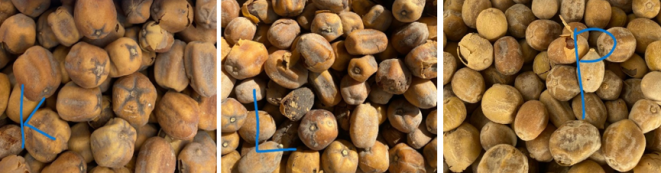
Figure 1. Different fruit samples of Balanites aegyptiaca (L) Del harvested (K=Kaolack; L=Louga; P=Podor).
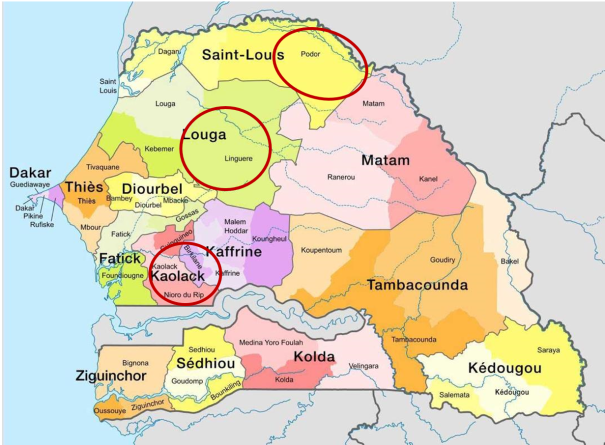
Figure 2. Geographical location of the origins of the fruits of Balanites aegyptiaca (L) Del.
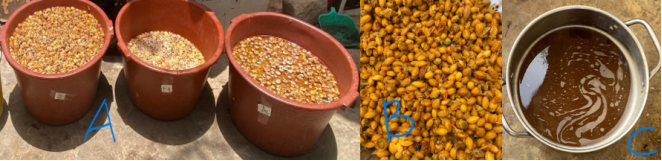
Figure 3. Pulping of fruits of Balanites aegyptiaca (L) Del (A= Soaking; B= Shell; C= Juice).
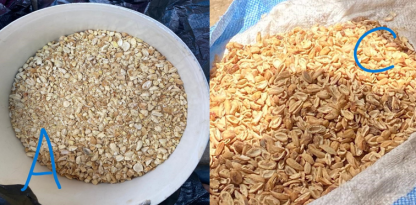
Figure 4. Almonds and Shells of Balanites aegyptiaca (L) Del.
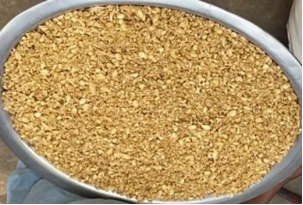
Figure 5. Kernels of Balanites aegyptiaca (L) Del treated for extraction.
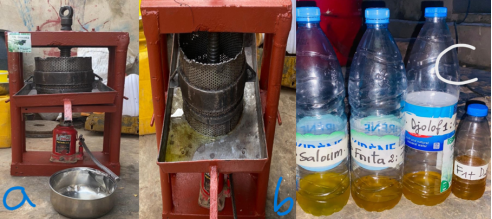
Figure 6. Hydraulic press (a = complete device; b = the oil outlet; c= extracted oils).
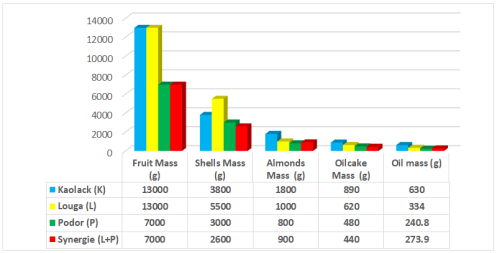
Figure 7. Comparative histogram of masses according to the different parts of Balanites aegyptiaca (L) Delile.

Information



 Share This Article
 Twitter
 Linked In
 Facebook

 Copy
 Download